Contagion goes through its plot with the feeling of a documentary whilst also creating a realistic feeling for the audience. The way Contagion is filmed is similar to a documentary; there are some still shots or they are recording from a distant point of view. This makes it feel less like a suspenseful watch and more on the side of realism. The roles of the public health institutions trying to solve the pandemic crisis make it seem very comparable to our world. The realism of this film shows what could actually happen in our day to day life, similar to COVID-19. The hyperlink narrative of multiple peoples’ perspectives at once helps audience engagement. It shows it to be more realistic when it is happening all around the world and not just in one place. The showings of multiple experts on the case make it feel interconnected and more like a documentary. The change from each characters’ perspective feels natural to watch and isn’t confusing at all, this shows how an outbreak such as this one is possible and spreads fast. This adds a dramatic essence to the films’ production and urgency which projects to the audience through the screen. Many different films use fractal structure similar to Contagion. In this film it shows different storylines of people who are affected by the same crisis. From touching surfaces, hand shakes, small actions that transmit the disease to each person. The characters in this show never meet or rarely do but their actions affect one another across the globe. Contagion uses network storytelling by showing the multiple storylines in the world going through the same thing. The actions from one place to another all affect each other and lead back to one person. This portrays the crisis as a global issue and not just individual. This film embraces how much depth and complexity real world issues actually have to them and the difficulties authorities go through to help solve them.
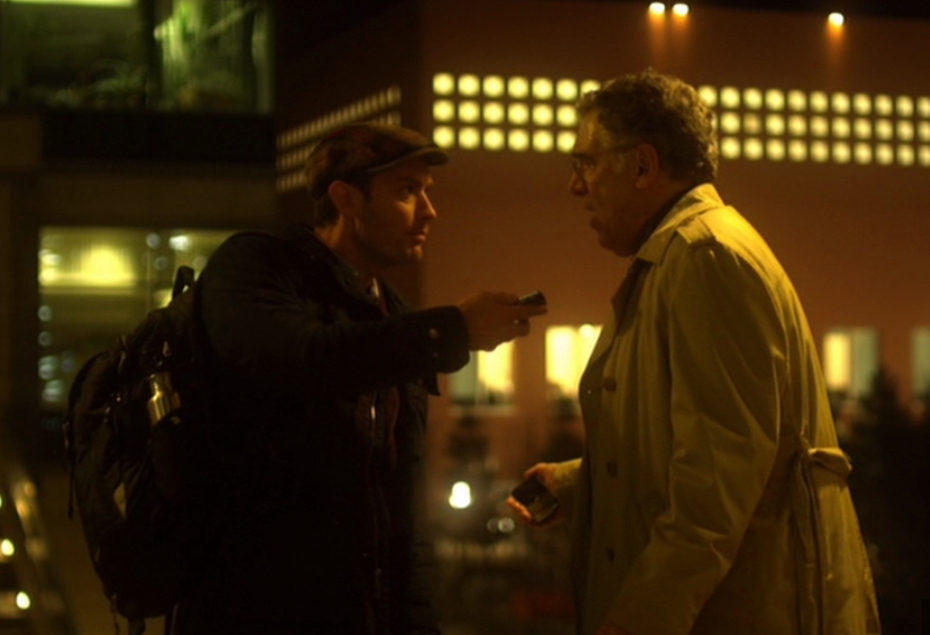
The character Alan Krumwiede (Jude Law) has a very strong internet presence shown in the film. With this internet attention he states he has a cure for the virus. Though this isn’t true, since his blog went viral thousands of people believed him. This is a clear example of how misinformation is spread because people will believe anything they see online. Scott Burns’ metaphor is reinforced throughout the film, the misinformation about the virus was spread as fast as people were getting sick. Society was not just infected by the virus but it is shown how fast peoples’ brains get filled with lies, and emotional outbreak occurs. There are many ways in which this film parallels real world conspiracy theories in relation to COVID-19. For example, Krumwiede continued to state that forsythia, a type of flower, is the cure for the virus, yet he has no evidence of it. During the COVID-19 pandemic, many individuals believed there were natural ways to prevent the virus, but there was no proof. These are similar examples of how information is spread on the internet and believed all over the world. During COVID-19 people were panicked to stock their homes with toilet paper, canned goods, and more, there is similarity to the in Contagion when people rushed to buy forsythia and other items out of panic. Soderbergh’s cinematography has realism and makes it feel natural. This film makes you feel like you are witnessing the outbreak and feeling present with each persons’ perspective. The characters’ emotions and experiences are realistic and believable to watch on screen. From how the medical professionals are shown to the muted colours and dull lighting, it really shows the authenticity of this film.
Globalization is shown in Contagion when the disease spreads around the world and with information. The virus is spread globally through travel, business, etc; economically the virus spreads fast from people doing day to day activity. Institutions (CDC) and other known businesses’ in the media are in control of what society hears and sees on tv. During this, social media spreads misinformation and facts about the virus. This shows how globalization can be both good and bad as shown in this film. It can spread information and help people understand the pandemic whilst also contaminating more people with the virus causing more sickness. Contagion shows globalization as everything and everyone being connected somehow in some way. This shows how the disease is spread as well as information or misinformation about it. Contagion shows globalization as both good and bad, then it could be considered neutral as it gives both risks and ways to help. Although the virus is shown to be global in the film western institutions are the main focus. This does reflect a western-centric view of crisis management. This film both reinforces and critiques the role of Hollywood in shaping global narratives. Unlike other films on pandemics or events similar, it emphasizes how complex and extreme an outbreak like this can get. It shows the scientific ups and downs involved to help this situation as well. At the same time, it reinforces it because it is still shaping how the audience sees science and authorities (CDC, WHO).
Mark Harrison’s view is supported in Contagion, pandemics in the modern world are central to environmental destruction and trade. It shows how interconnected people, institutions, and trade around the world can contribute to how viruses spread. At the end of the film it shows animals to humans to deforestation, the film visualizing how humans disrupt environments and ecosystems. It shows how pandemics can happen so easily. Contagion shows that pandemics and outbreaks are results of humans interactions with nature and the environment around them. This film clearly shows and gives warning about human encroachment on nature while also using it as a realistic plot device to show viewers the impact we have on the planet and consequences for our actions. In the film, vaccines are controlled because of the greediness of corporate institutions. Capitalism and corporate greed are clearly shown to worsen the pandemic in the film. When Alan promotes his fake cure for the disease, forsythia. Comparing to another film, in Avatar, the humans are shown as greedy by exploiting the resources and the ecosystems on Pandora. They end up destroying the planet because of their greediness and capitalistic behaviours.
Overall, Contagion is a very in depth and critical story of how pandemics happen and how chaos erupts within society. It shows how complex a pandemic truly is in reflection to COVID-19, and not just the contagious sickness shown on the surface. The misinformation, scientific investigation processes, and behaviour of politics and society displays what happens to the world when crisis strikes. Human destruction of wildlife and ecosystems shows how all of our actions have consequences. After viewing this film we sit considering how our actions and choices create the world we live in and the consequences we are faced with.
Tadiwanashe Machana
For this analysis of the Contagion film, you addressed several core critiques. The ones you listed made sense and helped analyze the film. One of the critiques you mention is that the film feels like a documentary and that it creates a realistic feeling. You went ahead to back this fact and also link it to another critique named Realism, showing that gives the film a suspenseful watch and a more real-life experience. The other critiques mentioned are the hyperlink narrative, and you also addressed this by explaining what it means and what it shows, especially when you said, ” it shows multiple people’s perspectives at once and helps the audience engagement.” You gave a lot of context for why you think it is a hyperlink narrative. Some other ones you stated are like Fractal structure, Globalization and Deforestation. Another thing I liked is how you stated that it’s a Western-centric view however, when you said ” It shows how interconnected people, institutions, and trade around the world can contribute to how viruses spread” i don’t fully agree with the term “around the world” I feel its a miss interpretation as the whole world does not have a western centric view i mean i understand were you are coming from especially when you were explaining hyperlink narrative especially as it shows many perspectives but it still does not justify it being the same everywhere. A new idea you introduced that I hadn’t considered is when you compared the film Avatar to further support your claims that humans are the problem and that we are greedy, and to show that the situation has different outcomes.
dibeshwar routh
Transmission, Destruction, Disease: A review of Contagion
This entry has been an entry satisfying the requirements of a good media analysis because it addresses narrative structure, realism, thematic issues, and real-world parallels. The author has described clearly how the documentary-style images and the hyperlinking format make the film appear authentic. Their explanation of the changing attitudes being natural assists in demonstrating how the movie continues to be coherent despite the various storylines. The misinformation debate of longer discussion and the personality of Alan Krumwiede also work, particularly the drawing of parallels with forsythia and natural-cure rumours about COVID-19.
The new aspect that I have noticed was the comparison to Avatar to talk about corporate greed. This accidental association contributed to emphasising the fact that exploitation and profit motives are manifested in incredibly different genres, which supports the eco-critical interpretation of Contagion. The aspect of realism via subdued colours and drab lighting also contributed to the aspect of cinematography, creating credibility.
Some sections of the entry are too long and occasionally reiterate previous concepts, especially on globalisation and misinformation. The insights could be further narrowed in a more succinct format. The analysis is considered insightful, thorough, and shows a clear appreciation of how the film relates the decisions of the film to the larger social and environmental concerns.