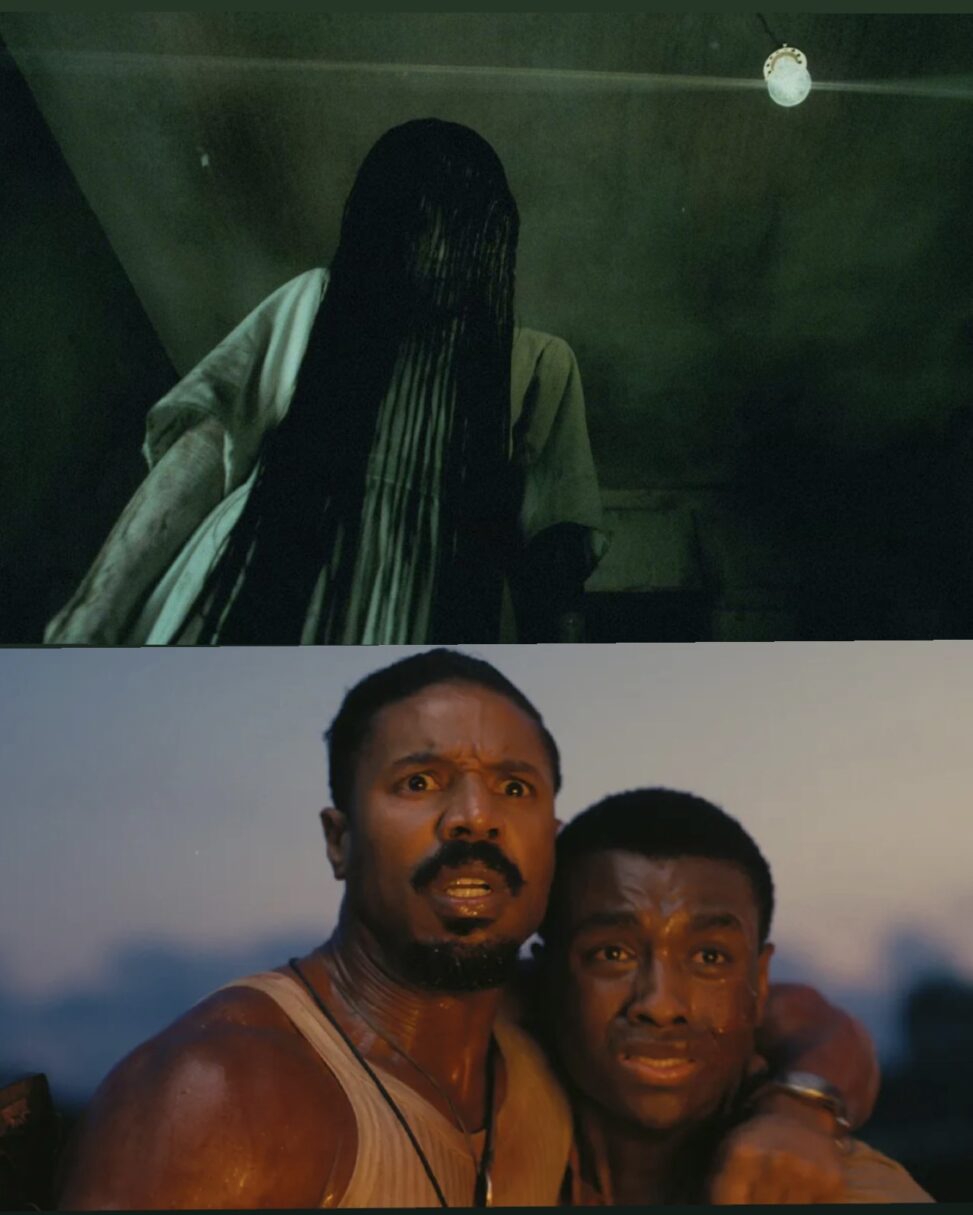
Both Sinners (2025) and Rings (2017) use supernatural horror as a vehicle for deeper themes. But the two movies approach horror quite differently. Rings is about a curse that spreads through technology, and Sinners explores identity, racism, and cultural survival through vampires and blues music.
Rings continues the famous Ring franchise, where watching a cursed videotape can lead to death in seven days unless you pass it on to someone else. Its horror is built on the idea that technology can carry evil. The film’s style is dark, full of grey and blue tones, shadows, and jump cuts that keep you on edge. It’s a modern, tech-driven horror movie that wants you to solve a puzzle by figuring out the curse and stopping it before time runs out.
Sinners, on the other hand, is different. It is set in the 1930s Mississippi, where it mixes Southern Gothic horror with religion, music, and aspects of racism. The story follows twin brothers returning home after doing crime, only to encounter a dark supernatural force waiting for them. The film’s style is more poetic and slow-burning. It’s not trying to shock you every few minutes, it wants the fear to settle in gradually.
In Rings, the audience follows the story like a mystery. You’re meant to follow clues, study the cursed tape, and try to understand the logic of the haunting. The movie practically turns you into an investigator alongside the main characters. The horror is about discovery and running out of time. Sinners, however, wants you to follow symbolically. Every scene, from the music to the church setting, to the vampires, is full of hidden meaning. You’re not just trying to understand what’s happening – you’re meant to interpret it, to connect the supernatural with real world struggles like racism, cultural survival and exploitation. In a way it tries to show us that the fight against monsters is really a fight to protect identity and heritage.
Both films rely on strong visuals to shape their tone and mood. Rings is full of dark rooms, flickering TVs, and distorted static that signal something awful is about to happen. The countdown of seven days creates a built-in tension that speeds everything up. It’s direct and relentless, like you’re always one step away from doom. Sinners moves slower and breathes more. It uses its visuals to create a sense of warmth and danger at the same time. The juke joint glows with ambient lighting and feels alive with music, but it all changes when vampires close in, turning celebration into terror. Slow camera moves and lingering shots build tension instead of jump scares, making you feel the weight of every choice. The mood shifts gradually, hinting that the real horror isn’t just the monsters – it’s what happens when culture and identity are under attack.
Each film also has a key turning point that changes everything. In Rings, it’s when Julia, the main character, watches the cursed tape and discovers new images inside it – footage that no one else has ever seen. In that moment, she realizes the curse is evolving, spreading like a digital virus that can’t be stopped. The camera zooms in tight on her face while the sound becomes distorted, making us feel trapped right alongside her. It’s the moment where the horror becomes unstoppable. In Sinners, the pivotal moment comes when the vampire Remmick is invited into the juke joint. By this point, Mary and Grace’s husband had already been turned, and Grace’s rage over what might happen to her daughter leads her to invite Remmick inside, breaking the last barrier of safety. From that moment, the film fully shifts from a tense Southern drama into a supernatural horror. The juke joint, once filled with joy and music, becomes a battleground as Remmick tries to turn most people into vampires and chaos takes over. This scene marks the moment where the fight changes from social struggle to pure survival.
Even though they’re both horror movies, Rings and Sinners have totally different goals. Rings warns us that in a world ruled by technology, even our screens can betray us. Sinners warns that in a world with racism and exploitation, even joy and culture can be hunted. The battle for music shows that heritage should not only be celebrated but also protected. Rings invites us to decode a curse; Sinners makes us decode ourselves.
Madeleine Sherman
Throughout your writing you show a strong understanding of the meanings behind each film. The descriptions you gave were very elaborative, and they help the reader understand better what your analysis is about. Although this may be helpful for a more in depth piece of writing, you could’ve shortened the description of each to a few sentences rather than two paragraphs. This would’ve given you more words to go into depth on your analysis of the two films. The connection to each prompt given isn’t clear, it seems you could’ve given more attention to the prompts provided. You did a great job going in depth about the mood, pace and viewer expectations for the movie Rings but you seemed to neglect Sinners. There could’ve been more depth given about the mood, pace, and viewer expectations in that film which could’ve made the analysis more complete. Your writing is clear in most sections, although there are some grammar and spelling mistakes. This piece of writing could’ve been made more professional, this would’ve helped the reader better understand your take on comparing both Sinners and Rings. Overall, you did a good job, these are just some things to think about for next time.